
Partial knee replacement is a surgical option for patients whose arthritis is confined to one or two areas of the knee. Rather than replacing the entire joint, only the damaged portion is resurfaced while preserving the healthy bone, cartilage and ligaments in the remaining areas. The procedure may be suitable when arthritis affects the inner (medial) compartment of the knee, the outer (lateral) compartment, or the joint between the kneecap and thigh bone (patellofemoral), or two compartments (bicompartmental) of the knee. Depending on the location and extent of the arthritis, this may involve a medial or lateral unicompartmental knee replacement, a patellofemoral joint replacement or in selected patients, a bicompartmental knee replacement. By preserving more of the natural knee, partial knee replacement may allow for a smaller operation and a more natural feeling knee for appropriately selected patients.
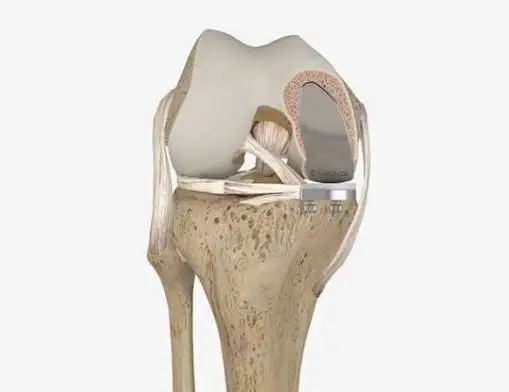
A partial knee replacement replaces only the part of your knee affected by arthritis, rather than resurfacing the entire joint. The damaged bone and cartilage are removed from the affected compartment and replaced with metal and plastic components designed to restore a smoother joint surface. The healthy parts of your knee are preserved, including as much natural bone, cartilage and ligament tissue as possible. Depending on the location of the arthritis, the procedure may involve the inner compartment, outer compartment, kneecap joint, or two compartments of the knee.
Partial knee replacement is generally considered when arthritis is confined to a limited area, and the remaining compartments and major supporting ligaments are functioning well. The aim of surgery is to reduce pain, improve movement and restore function while retaining more of your natural knee than would occur with a total knee replacement.
The knee is divided into three main compartments: the medial (inner) compartment, the lateral (outer) compartment, and the patellofemoral compartment between the kneecap and thigh bone. The type of partial knee replacement performed depends on which compartment, or compartments, are affected by arthritis:
Partial knee replacement may not be appropriate if arthritis is widespread throughout the knee, the ligaments are significantly damaged, there is marked stiffness or deformity, or another condition is contributing to your symptoms. Suitability is determined following a clinical examination and review of your X-rays and other imaging.
Dr Samson will assess the pattern of arthritis, the stability and alignment of your knee, your symptoms and your treatment goals before discussing whether partial or total knee replacement is the more appropriate option.
During the procedure, Dr Samson confirms which parts of your knee are affected and assesses your knee movement and ligament balance. The robotic system then provides real-time guidance to help prepare only the damaged compartment while protecting the healthy bone, cartilage and soft tissues that are being preserved.
The worn joint surfaces are removed within the planned boundaries and replaced with appropriately sized metal and plastic components. The system also allows Dr Samson to check implant positioning, alignment and knee balance before the components are secured. The robot does not perform the operation independently. Dr Samson remains in control throughout your surgery and can adjust the plan based on the condition of your knee and the findings during the procedure.
The technology is used to support precise bone preparation and personalised implant positioning while preserving as much of your natural knee as possible.
Recovery begins soon after surgery, with pain relief, wound care and early movement supported by the hospital team. You will usually be encouraged to stand and begin walking with assistance on the day of surgery. Crutches or another walking aid may be used initially while your strength, balance and confidence improve. A physiotherapy program will help restore knee movement, muscle strength and walking function. Early exercises generally focus on reducing swelling, improving your ability to straighten and bend the knee, and activating the surrounding muscles. Your rehabilitation will then progress according to your recovery and individual goals.
Many patients recover more quickly after partial knee replacement than after total knee replacement because more of the natural knee is preserved. Recovery varies between patients, however, and depends on factors such as your general health, fitness, the type of procedure performed and how consistently you follow your rehabilitation program.
You will have follow-up appointments with Dr Samson to monitor wound healing, knee movement and overall progress. Your return to driving, work and recreational activities will be guided by your recovery, the demands of the activity and Dr Samson’s advice. High-impact activities may not be recommended after knee replacement surgery.
Arthritis may also develop or progress in the parts of your knee that have not been replaced. If this occurs, or if the partial knee replacement wears or loosens over time, it may eventually need to be converted to a total knee replacement.
Partial knee replacement is not suitable for every patient. The condition of your remaining cartilage, ligaments and bone, as well as your knee alignment, general health and activity requirements, will be considered when determining the most appropriate procedure. Although partial knee replacement may involve a smaller operation and lower rates of some complications than total knee replacement, results and recovery vary between patients, and a particular outcome cannot be guaranteed.
Dr Samson will discuss the expected benefits, alternatives and individual risks with you before surgery.