
Anterior Approach Total Hip Replacement (Arthroplasty)

Understanding the muscle-sparing approach to hip replacement

The anterior approach allows Dr Anthony Samson to access your hip joint from the front, working between natural muscle planes. It generally avoids detaching major muscles from bone, which is why it is often described as muscle-sparing.

As with other total hip replacement techniques, the damaged ball and socket are replaced with artificial components. The aim is to reduce pain and improve movement when treatments such as physiotherapy, medication or injections no longer provide adequate relief.

How does it compare with other approaches?

The main difference is the pathway used to reach the joint:
Each approach has benefits and limitations. The anterior approach may support early recovery in suitable patients, but no single approach is best for everyone.

How is your surgery planned?

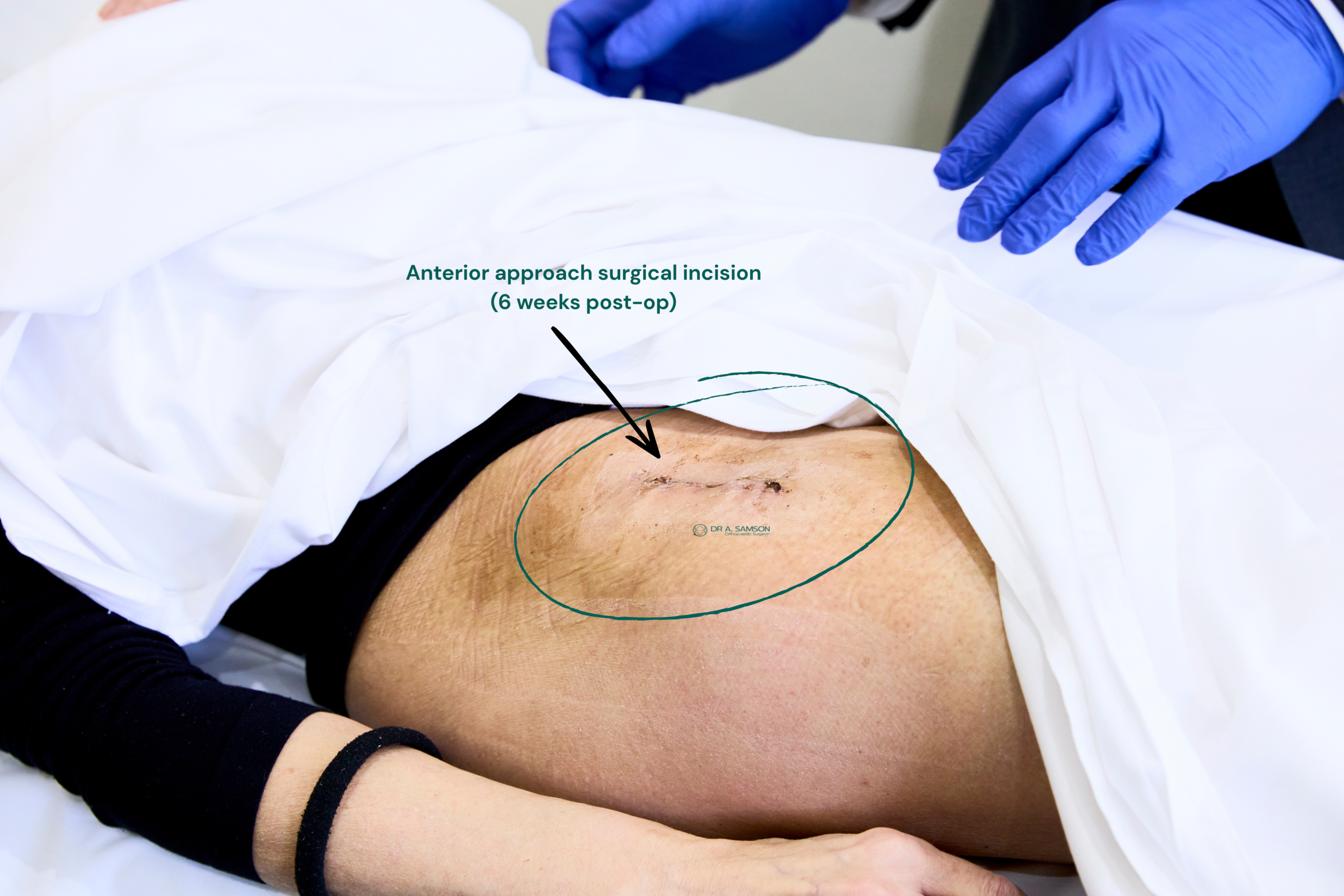
Dr Samson assesses your symptoms, mobility, general health and imaging to plan your surgery. Your bone quality, hip anatomy and any previous surgery help guide the choice of approach, implants and implant positioning. The incision is made at the front of the hip. It may run vertically or follow the groin crease, known as a bikini-line incision, depending on your anatomy and surgical requirements.

What should you know about recovery and risks?

Muscle-sparing surgery still involves healing and rehabilitation. Walking aids, exercises and physiotherapy support your recovery, with progress varying between patients. Potential complications include infection, blood clots, fracture, dislocation, implant loosening and nerve injury. The anterior approach can also cause numbness or altered sensation around the outer thigh.

Is the anterior approach right for you?

Suitability depends on your anatomy, joint damage, previous surgery and overall health. Dr Samson will discuss your surgical and non-surgical options, expected recovery and individual risks to help you make an informed decision.