
Total hip replacement surgery involves replacing the damaged ball and socket of the hip joint with prosthetic components designed to restore smoother movement and improve function. During surgery, the worn femoral head is replaced with a smooth prosthetic ball attached to a stem, while the hip socket is fitted with a new cup and liner to create a smooth bearing surface.
This procedure is commonly performed to treat advanced hip arthritis and other conditions that cause significant hip joint damage. The aim of surgery is to help reduce pain, improve mobility and function, and support a return to everyday activities.

If hip pain and stiffness are beginning to affect your mobility, sleep, exercise, or everyday activities, total hip replacement surgery may be considered as a treatment option. Hip replacement surgery is most commonly performed for arthritis and other conditions that cause damage to the hip joint.
Before surgery is recommended, non-surgical treatments such as physiotherapy, activity modification, medications, and injections are usually explored first. When these measures are no longer providing adequate relief, hip replacement surgery may help improve comfort, movement, and overall function.
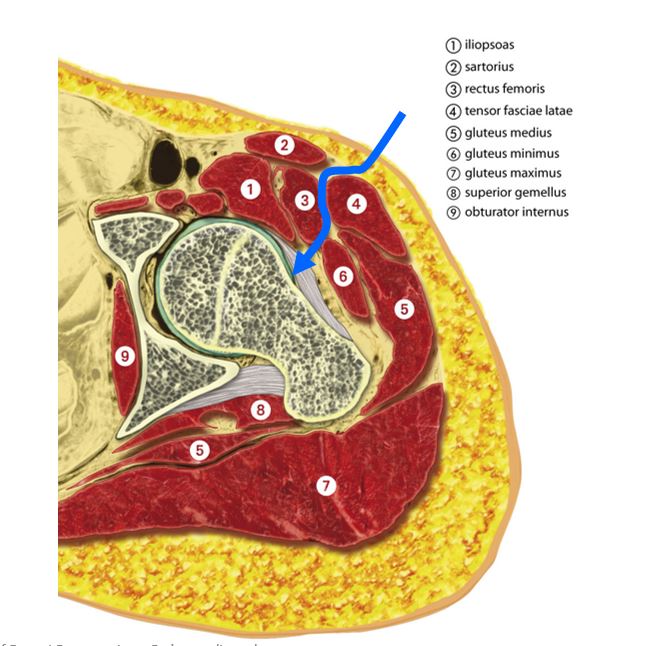
The anterior approach for hip replacement works between natural muscle planes, rather than detaching major muscles from bone, which is why it is often described as a muscle-sparing approach.
This approach may support early movement and recovery following surgery. Patients are often able to begin walking soon after surgery with guidance from the physiotherapy team.
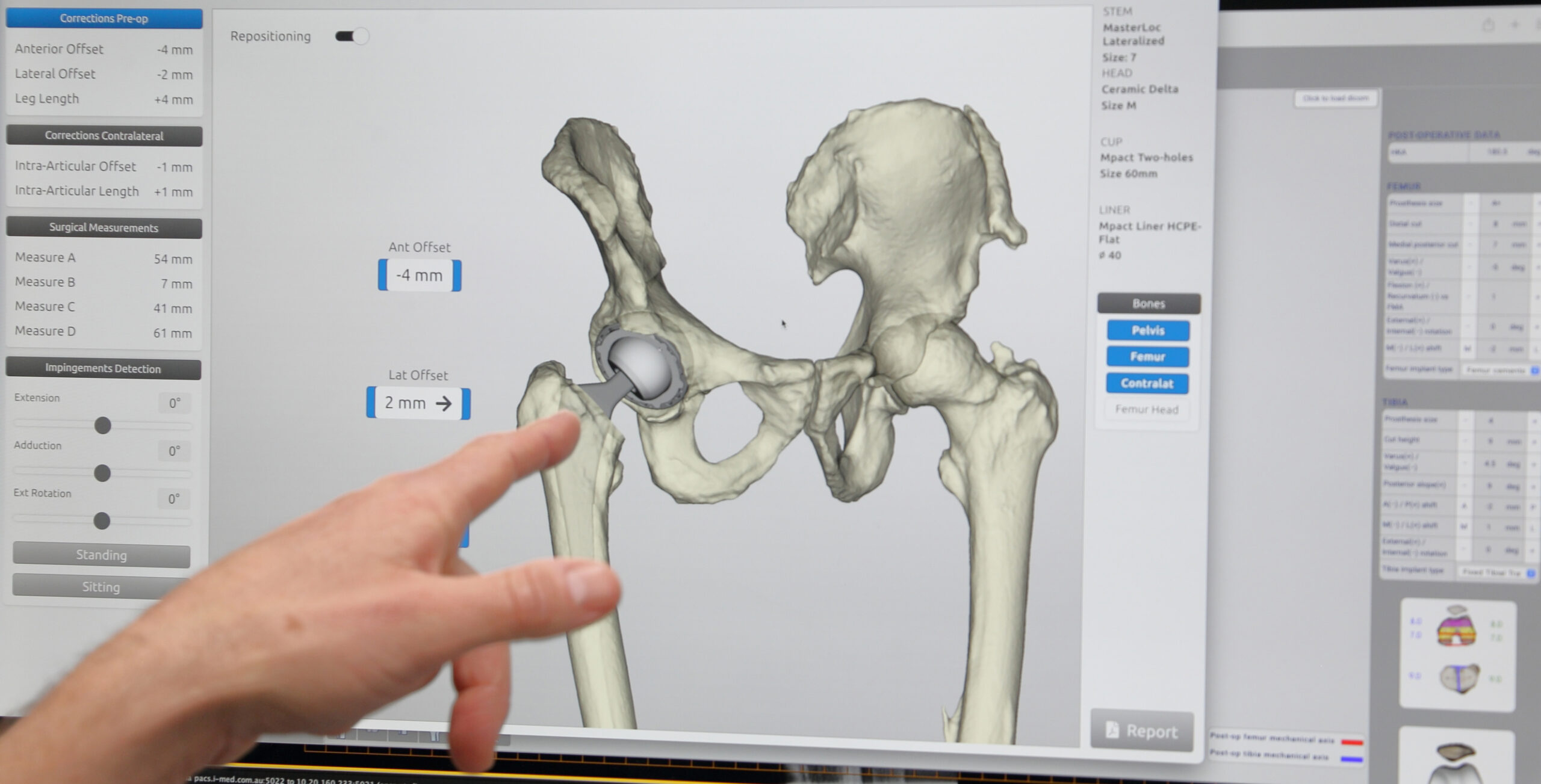
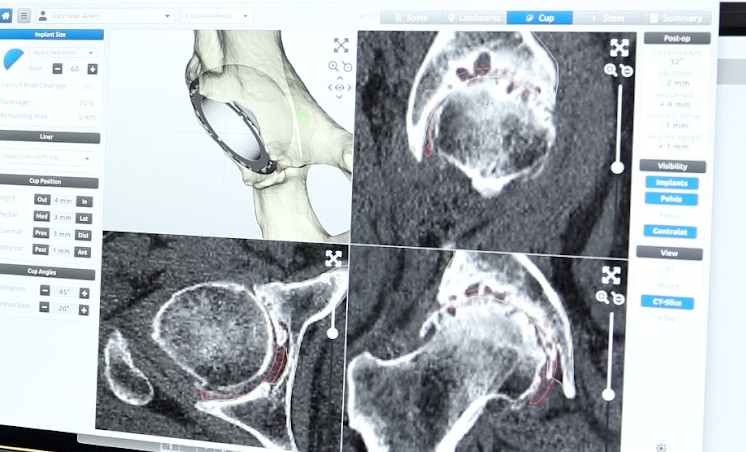
Careful planning plays an important role in total hip replacement surgery. Before your procedure, Dr Samson reviews detailed imaging of your hip joint, including X-rays and CT, to assess the structure, alignment, and anatomy of your hip.
Advanced digital planning technology is used to assist with patient-specific surgical planning. This allows implant size, positioning, leg length, and joint alignment to be carefully assessed prior to surgery.
By analysing your individual anatomy before the procedure, the surgical plan can be tailored to help support appropriate implant positioning, leg length, joint stability, and overall hip function following surgery.
More information about this process can be found on the Patient-Specific Hip Replacement page.
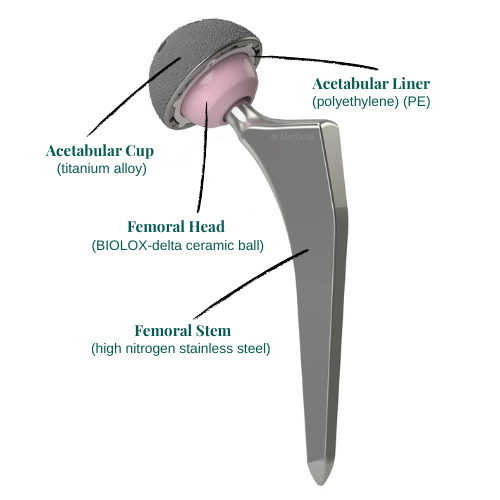
A total hip replacement uses prosthetic components to replace the damaged parts of the hip joint. These implants are designed to restore smooth movement, stability, and function.
The femoral component, commonly referred to as the stem, is inserted into the thigh bone (femur) and forms the foundation of the new hip joint. Dr Anthony Samson commonly uses a cemented femoral stem, where specialised surgical cement is used to secure the implant within the bone. This technique provides immediate fixation of the stem within the femur at the time of surgery and allows for a reliable, well-controlled fit. The stem is made from strong, biocompatible metal and is available in different sizes and shapes to help match your individual anatomy.
The femoral head attaches to the top of the stem and forms the “ball” of the new hip joint. It moves within the socket component to allow smooth, controlled movement.
Femoral heads are commonly made from:
The acetabular component replaces the socket of the hip joint. It is typically made from metal and fitted securely into the pelvis to provide a stable foundation for the new joint. This component is commonly press-fit (cementless) into the bone, with a porous surface designed to allow bone to grow onto the implant over time.
The acetabular component includes:
The articular surface, also known as the bearing surface, is where movement occurs between the ball and socket components of the hip replacement. Dr Samson commonly uses a ceramic-on-polyethylene bearing, where a ceramic head moves against a highly cross-linked polyethylene liner. This combination is widely used due to its smooth movement, durability, and low wear characteristics.
A step-by-step guide to your hip replacement procedure
Preparing for total hip replacement surgery involves several important steps before, during, and after your procedure. Dr Anthony Samson and his team will guide you throughout the process to help support a safe hospital stay and smooth recovery.
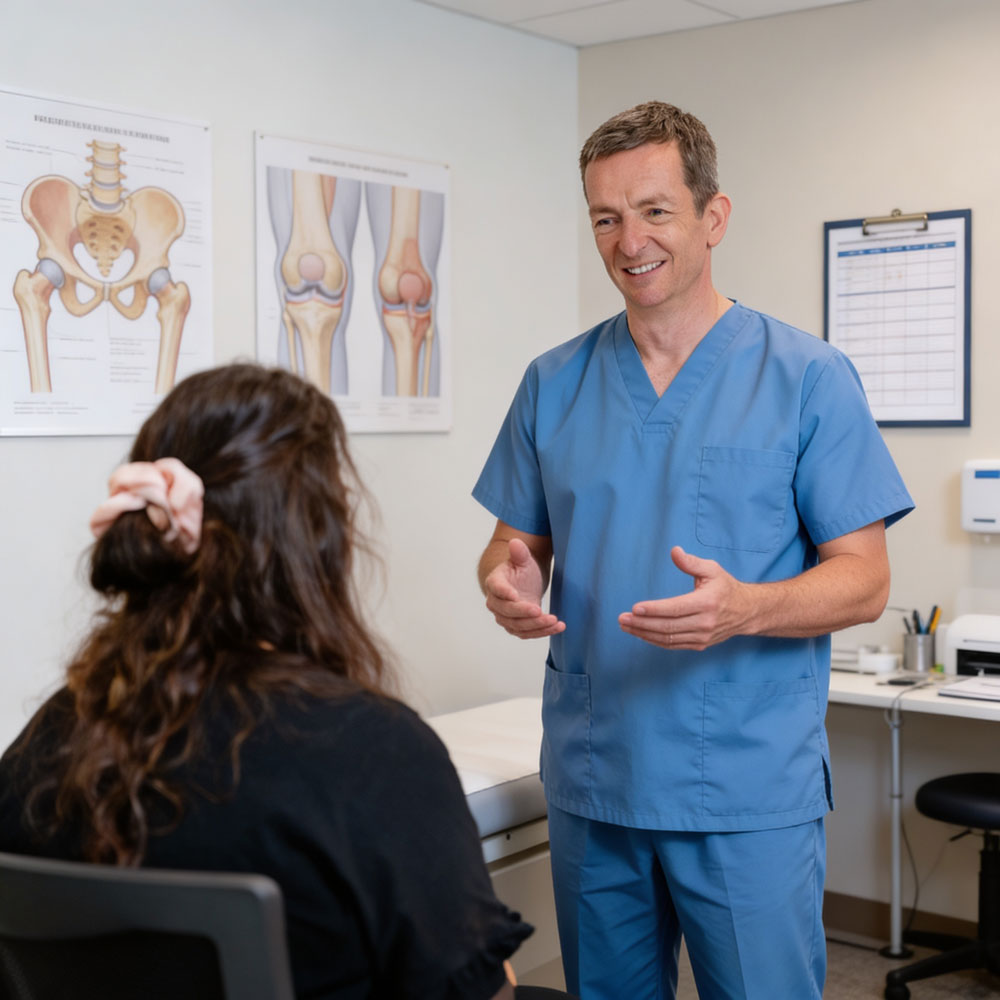
A referral from your GP or other medical practitioner is required to receive a Medicare rebate for your consultation with Dr Samson. During your consultation, Dr Samson will review your symptoms, medical history, previous treatments, and imaging, before performing a clinical assessment of your hip. This appointment is an opportunity to discuss how your hip condition is affecting your mobility, daily activities, exercise, and quality of life.
Non-surgical and surgical treatment options will be discussed, including whether total hip replacement may be appropriate. If hip surgery is recommended, further imaging or investigations will be arranged to assist with surgical planning.
In the weeks leading up to surgery, you will receive guidance about preparing for your hospital stay and recovery at home.

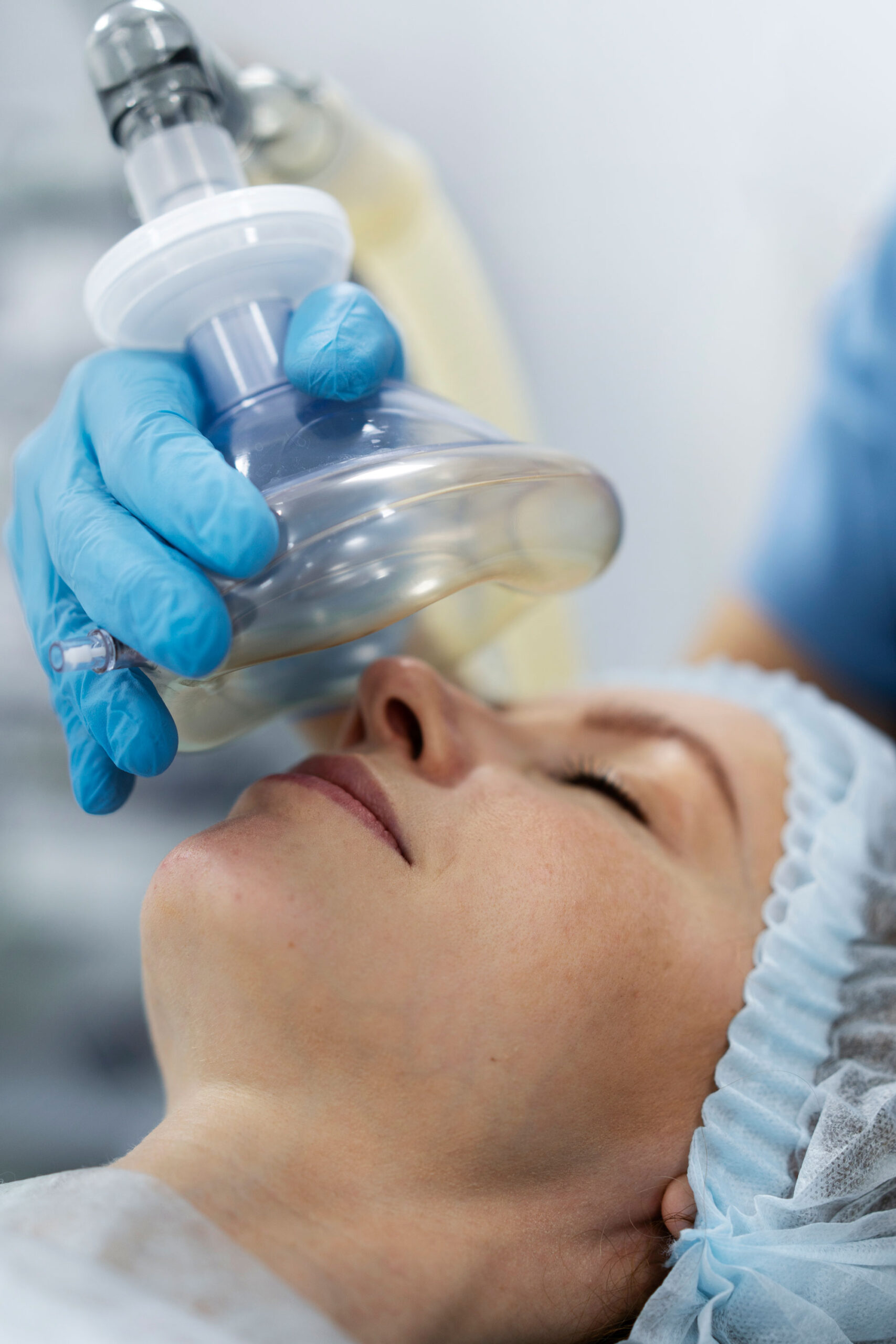
Spinal anaesthesia is commonly used for hip replacement surgery and is often combined with sedation to help keep you comfortable throughout the procedure.
Pain relief is carefully managed following surgery to help keep you comfortable and support early mobilisation. This may include a combination of medications tailored to your individual needs.
In many cases, a spinal anaesthetic used during surgery can continue to provide pain relief in the early stages after the procedure. Ice therapy, gentle movement, and regular physiotherapy also play an important role in recovery and comfort.
Most patients remain in hospital for approximately 2 to 4 days following surgery, depending on their recovery and overall health.
During your hospital stay, the nursing and physiotherapy team will assist you with:
Physiotherapy is an important part of recovery following hip replacement surgery. Rehabilitation focuses on gradually improving:
Most patients continue physiotherapy exercises at home after discharge, with activity levels gradually increasing over time.
Recovery timelines vary between individuals, however many patients are able to gradually return to everyday activities over the weeks following surgery.
Driving, work, exercise, and recreational activities will depend on your recovery progress, the type of work or activity involved, and your individual surgical plan. Dr Anthony Samson will provide personalised guidance throughout your recovery.

Most patients remain in hospital for approximately 2 to 3 days following surgery. During this time, the team will assist with pain management, physiotherapy, walking, and early recovery.
Modern pain management strategies are designed to help keep you comfortable following surgery. These may include spinal anaesthesia, local anaesthetic infiltration, ice therapy, and post-operative medications. The arthritic pain that led to surgery may improve relatively early, although surgical discomfort, swelling and stiffness are common during the initial recovery.
Most patients begin walking with assistance shortly after surgery. Walking usually improves steadily over the first few weeks, although strength, confidence, and endurance continue to improve over several months.
Many patients use a walking frame or crutches during the early stages of recovery before gradually transitioning to a walking stick and eventually independent walking. The exact timeframe varies depending on strength, balance, mobility, and overall recovery progress.
Some patients notice temporary clicking, tightness, or altered sensations during the early stages of recovery. These symptoms often improve as swelling settles and strength returns.